Nearly four years. Consumers are holding onto their devices longer than ever, highlighting how users are capitalizing on the full value of aging devices rather than a shiny new phone, according to Assurant’s Mobile Trade-In and Upgrade Industry Trend report.
For consumer electronics companies, pushing upgrades versus supporting repairability are both on the table. “It’s not an either-or discussion. There are people who are going to want to upgrade,” Director of Consumer Hardware Operations at Google Steven Nickel said.
Some consumers will not, and for them, “it’s about stretching upgrade cycles.” Nickel has spent significant time and effort on this one mission: “How do you create space for everyone?”
For VP of Partnership Solutions at iFixit, Matt Zieminski the answer to that mission is repairability.
According to Zieminski, iFixit consumers’ repairability demand starts to rise 18 to 24 months after a product’s release. He attributed rising device costs, expanded walk-in repair centers, and pandemic-era habits have all contributed to growing repair activity.
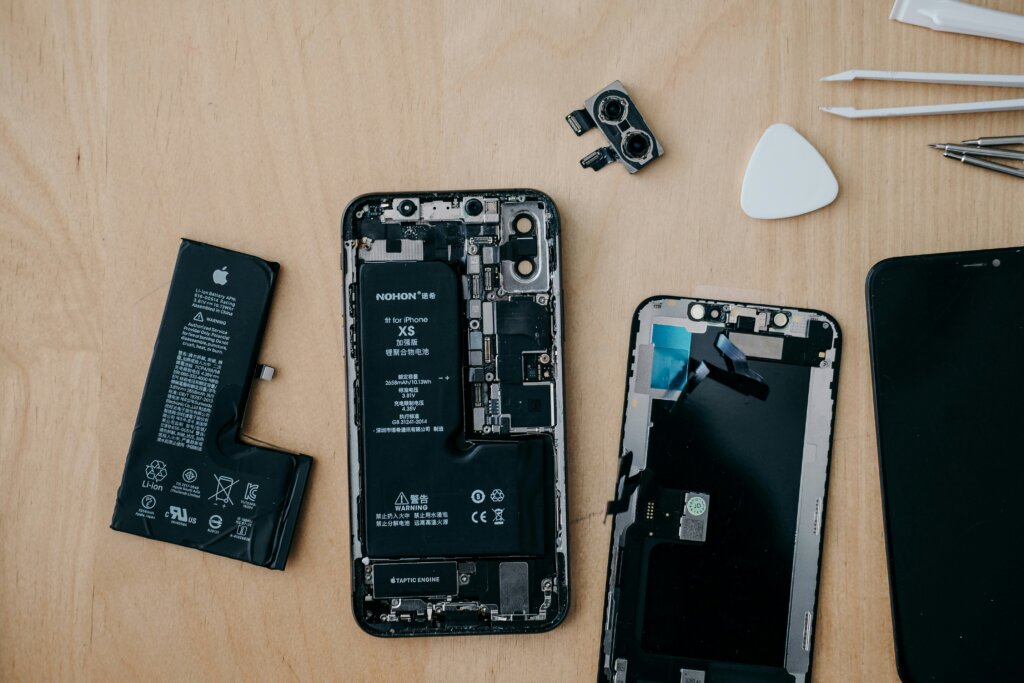
Battery degradation is one of the most common drivers that pushes consumers to choose between buying new and repairing a device. Most devices are designed to maintain over 80% battery capacity for roughly 1,000 charge cycles, but performance often declines noticeably within three years. Whether a battery can be easily replaced often determines whether a device gets repaired, resold, or discarded.
“A consumer is going to have to replace the battery. The questions are: Is that possible to do at all? And then how often can you do that without damaging something else?” Zieminski said.
Recent regulatory pressure from right-to-repair laws and rising consumer costs have accelerated design changes. Manufacturers are adopting electronically debondable adhesives and more standardized screw systems, making disassembly less destructive. Google’s latest Pixel Watch and Pixel Buds were designed with simplified battery access, an intentional move toward longer product lifecycles.
Nickel argues that repairability is no longer separate from good design — it’s part of it.
“The principles of good design and good design for repairability overlap more than people think,” he said. Simplifying disassembly often simplifies manufacturing rework and assembly as well.
That alignment points to a larger shift: repair data is becoming an engineering metric.
Most manufacturers collect warranty and RMA data, but few use it to its full potential. When analyzed properly, across failure points, part replacement frequency, and time-to-repair, repair data becomes a real-world stress test for design.
“That’s the missed opportunity, in my opinion. Repair data is essentially post-sale product telemetry, but for physical hardware. Companies that treat it that way should gain a long-term competitive edge,” Zieminski said.
Nickel describes using quantifiable repair scores to show engineering teams how specific design decisions can improve or reduce serviceability — effectively creating a repair “report card.”
“You’re using a way to quantify it and convert it into a language that works really well in an engineering cycle,” he said.
There’s also a clear business case. Walk-in repair centers generate out-of-warranty revenue while strengthening brand loyalty. Devices that remain functional and serviceable for five or more years deepen ecosystem trust — expanding a customer base beyond early adopters.
As upgrade cycles stretch, durability becomes more than a sustainability message. It becomes a competitive differentiator.
“When customers know a device is built to last and it will be easy to fix if needed, you build a relationship and strengthen trust with them. As a result, they are also more likely to return to you and your ecosystem of products for their next upgrade,” Nickel said.