
Palo Alto, Ca. — March 16, 2026 — Instrumental Inc. today announced a new AI-powered quality control system to detect subtle defects in high-density, blind-mate connectors — one of the fastest-growing yield risks in advanced compute system manufacturing.
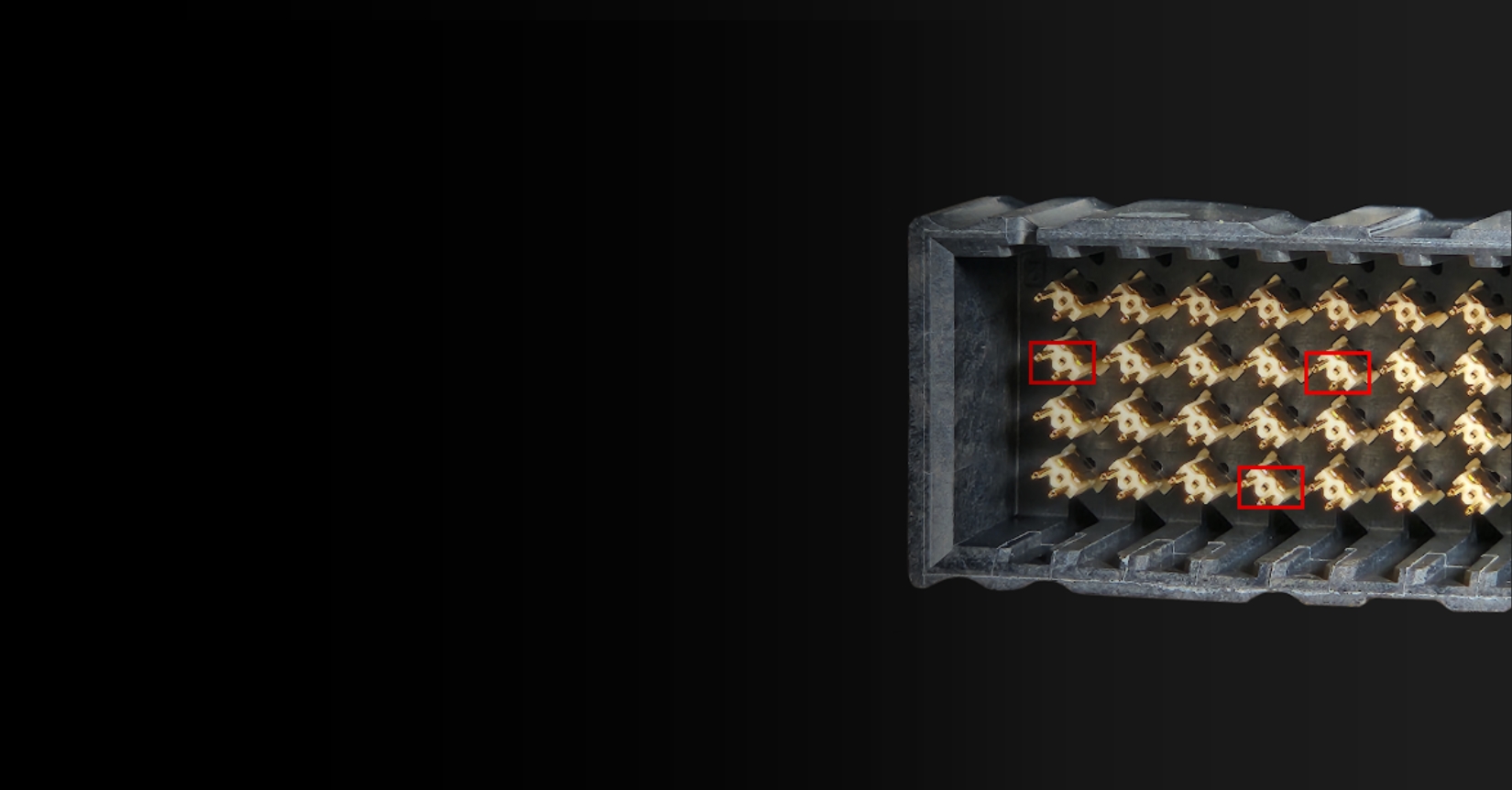
Modern compute architectures increasingly rely on dense connector arrays to simplify assembly and modularize high-performance subsystems – whether at the midplane or backplane. These connector arrays can contain hundreds or even thousands of pins, and minute deformations on a single pin can cause complete system failure, or worse, damage the connector mounted to an expensive PCBA on the mating side. Due to limited physical access and the subtle nature of these defects, manual inspection is inconsistent and unreliable at production scale.
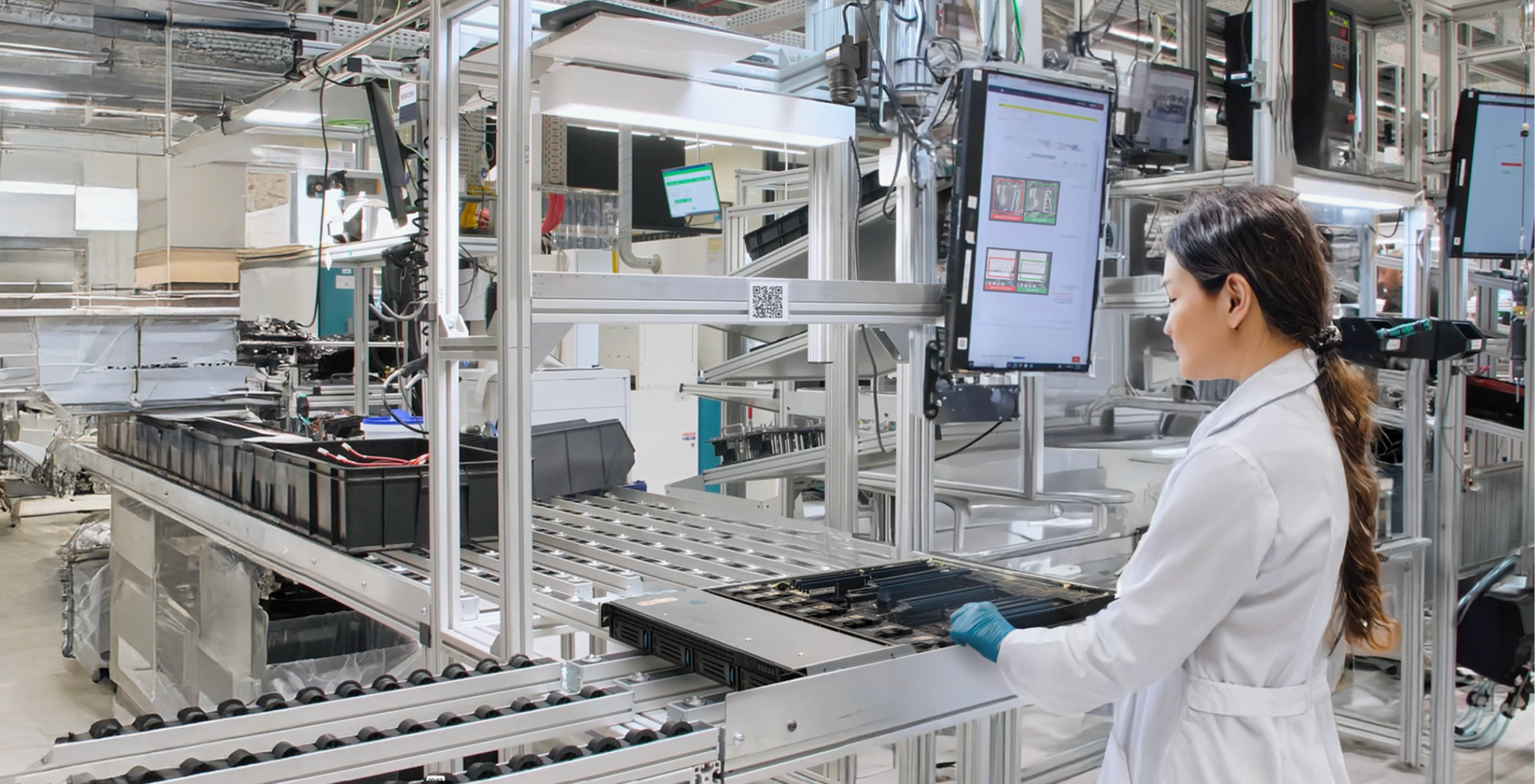
Instrumental’s Synchronized Learning for High-Density Connectors replaces manual checks with automated, AI-driven analysis designed specifically for extreme pin density. Validated in production on leading L6 (PCBA) and L10 (tray) AI Compute assemblies, it inspects hundreds of pins in a single pass and delivers in-line judgments in under 30 seconds. But inspection is only the beginning: every result strengthens a synchronized model inside Instrumental’s unified engineering and quality platform, creating a single, continuously improving standard that governs connector quality across lines, sites, and manufacturing partners.
That unified platform is what enables Instrumental’s Synchronized Learning model to operate as a single, in-line quality control system — delivering production-grade performance on Day 1. In addition, the technology enables flexible tuning to a variety of defect modes — including debris, damage, and pin deformation — ensuring comprehensive coverage across the defect types that matter most.
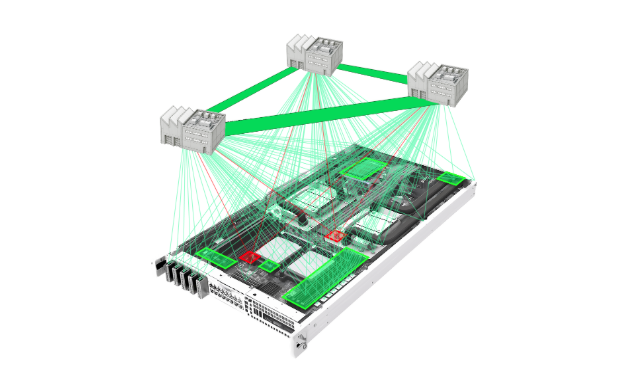
Unlike traditional automated optical inspection (AOI) systems, Synchronized Learning pools data from every pin location into a single, shared model. This approach enables rapid training and maximizes learning from each damaged example. Inspection models are production-ready for new lines and sites at launch, allowing OEMs to enforce a consistent quality standard from Day 1. Engineers can take their trained pin model and synchronize it across SKUs, products, and manufacturing sites – effectively creating a single model that maintains a single standard of quality for all selected inspections.
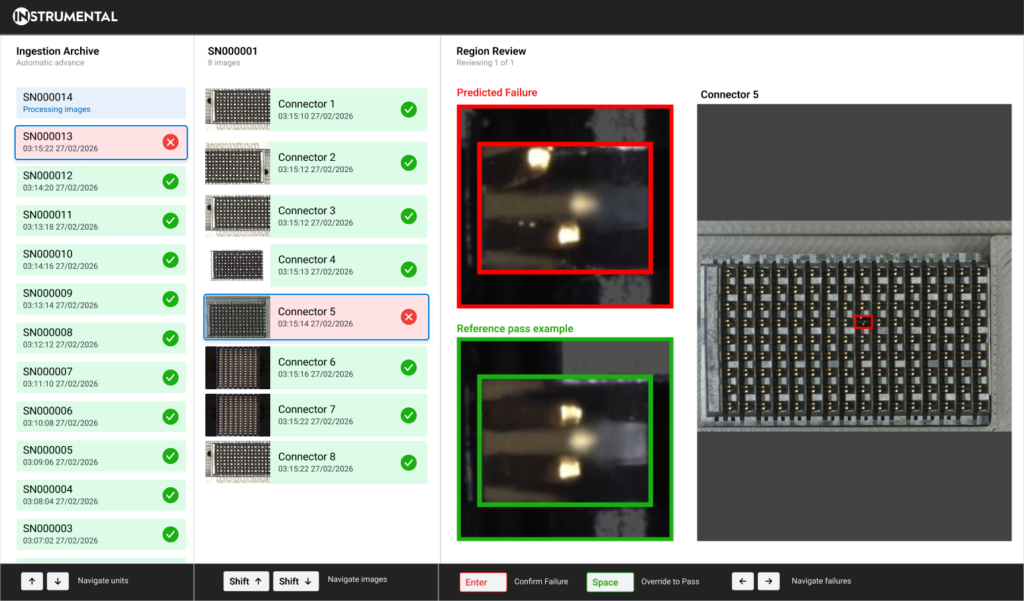
Instrumental’s manufacturing control platform identifies defects on a high density pin connector.
Initial production deployments on next-generation AI compute platforms, including NVIDIA ‘s compute board programs in San Jose and Taiwan, have achieved 99.9% accuracy with production-ready false positive rates.
By replacing unreliable manual inspection with Instrumental’s automated, consistent coverage, OEMs can:
- Improve first-pass yield by catching damaged connectors before integration and test
- Increase final yield and reduce scrap by identifying and correcting the process steps that cause damage
- Standardize quality globally with one synchronized inspection model across sites and partners
- Validate thresholds and govern supplier performance using data from Instrumental’s unified engineering and quality platform
Instrumental will demonstrate Synchronized Learning for high-density connectors live at NVIDIA GTC in San Jose on March 16-19 at Booth #1937. Schedule a demo.
About Instrumental
Instrumental builds a manufacturing AI and data platform that enables electronics companies to accelerate new product introduction and improve production yield. Leading brands, including Meta, and F5, rely on Instrumental’s platform to improve first-pass yield, reduce rework, increase throughput, and save engineering time. Anna-Katrina Shedletsky and Samuel Weiss, two former Apple product design engineers, founded the company in 2015. Instrumental is headquartered in Palo Alto, California, with a global footprint.
Authors

Related Topics